
On Wednesday 16 September, we brought together Fellows, charity partners and key stakeholders at Mansion House for this year’s Fellowship in the City, themed around Pathways to Progression, with a particular focus on STEM.
Welcoming guests, Jessica Leigh Jones MBE FCGI, our Chair reflected on the full-circle moment of standing in the same room she did when she was a keynote speaker two years ago. She traced the event back to the founding links between the City of London, the Livery Companies and our long-standing partnership with Imperial College London – a relationship stretching back nearly 150 years, and to the organisation’s Royal Charter commitment to promoting technical education “for the benefit of science, the fine arts and industry,” a mission, she noted, that feels just as urgent today as it did when we were founded in 1878.
Why access to STEM matters
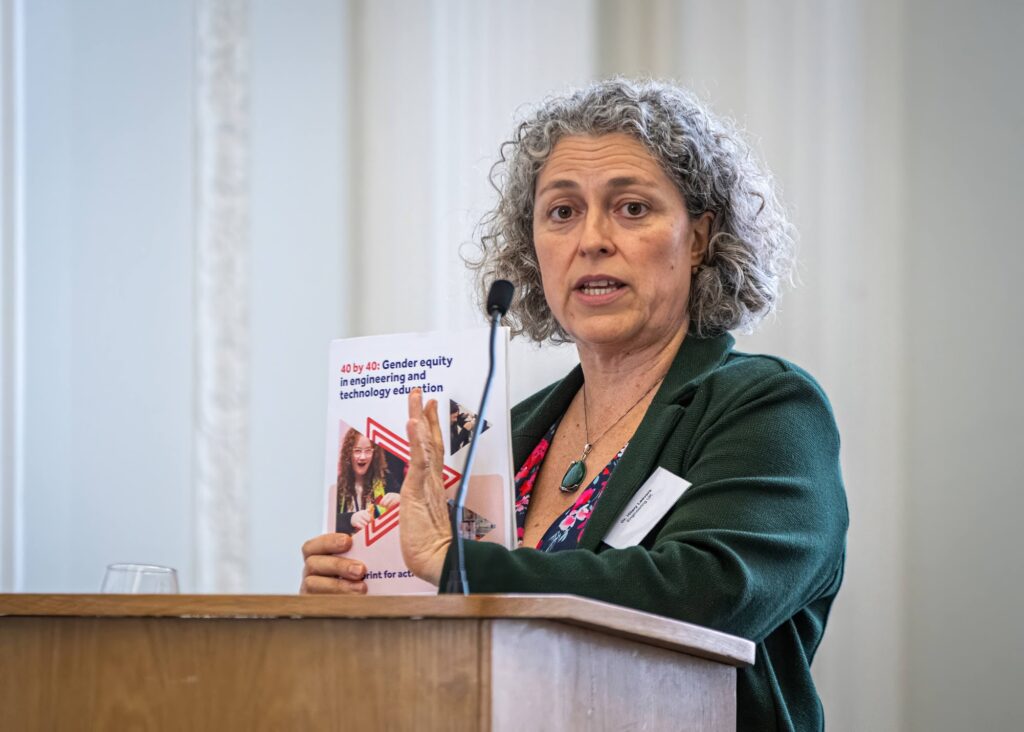
The afternoon’s keynote came from Dr Hilary Leevers, Chief Executive of Engineering UK, who set out a compelling case for why access to engineering and technology careers matters, not just for the individuals it can transform, but for a country facing a growing skills shortage. Engineering and technology, she argued, underpin the basics modern life depends on food, water, shelter, travel, communication, and increasingly the response to climate change and national security. Yet the sector remains short of the people it needs, and the gap is forecast to widen, with Skills England identifying engineering as the occupation likely to see the greatest additional demand by 2030.
Hilary was frank about who is missing from that pipeline. Women make up just 17% of the engineering and technology workforce, against 56% of the workforce overall; people from global majority ethnic groups and disabled people are also under-represented. It’s part of why Engineering UK set up its Gender Pathways Collective, and she pointed guests towards its new policy paper, 40 by 40: Gender Equity in Engineering and Technology Education – A Blueprint for Action. Closing on a note about artificial intelligence, she called for balance: helping this generation build genuinely valuable AI skills without losing the core thinking skills underneath them and building an education system flexible enough to keep pace with change while still giving educators, employers and students the stability to plan ahead.
From provocation to panel
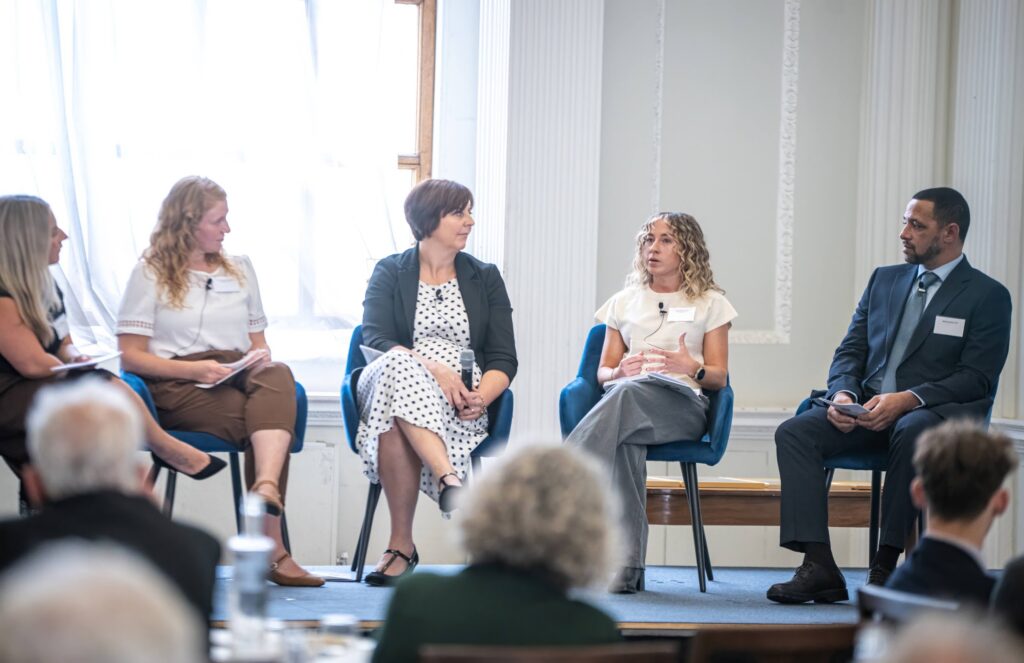
That provocation fed directly into a lively panel discussion, bringing together Dr Amanda Aldercotte (Engineering UK), Malachi Bakas FCGI (Belmont Park School), Laura-Jane (LJ) Rawlings MBE DL FCGI (Youth Employment UK) and Grace McCrickard (Amentum) whose own journey from leaving school at 16 with a handful of GCSEs to a Bachelor’s degree in Electrical Engineering, via a traineeship, NVQs, an HNC and an HND, was a powerful illustration of what alternative routes into STEM can achieve. The panel explored where young people fall out of the pathway into STEM and who gets missed by the data, what LJ’s newly-launched Youth Voice Census reveals about what young people themselves say they need, and how to reach those who don’t yet see STEM or technical routes as “for them.” Guests then carried the conversation into breakout tables, feeding back their own reflections before the room turned insight into action together.
Fellows in the City
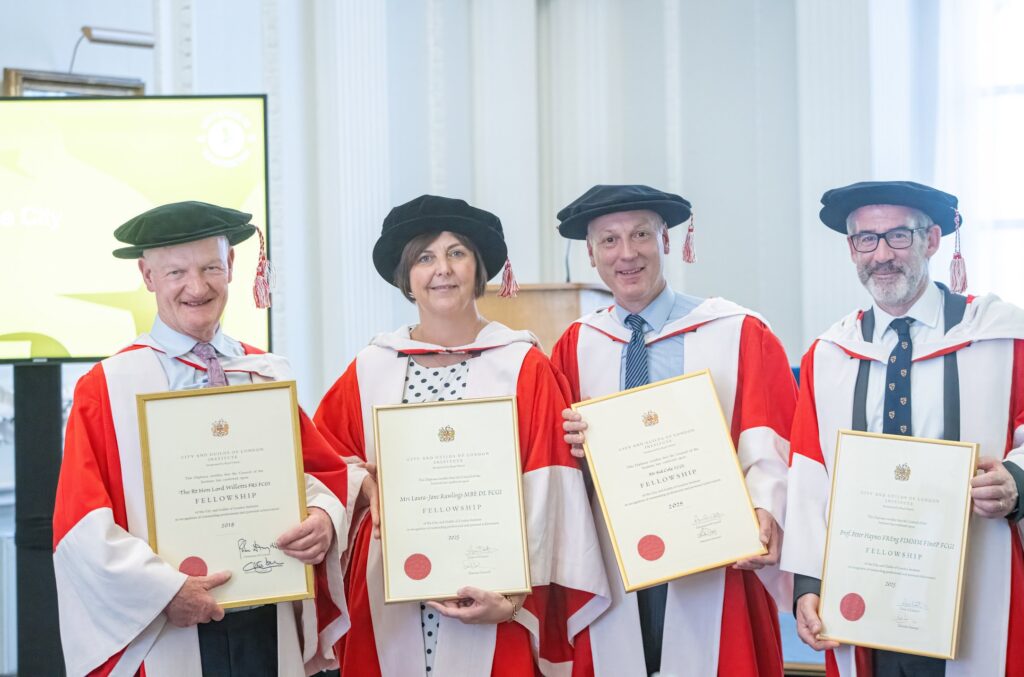
The afternoon closed with one of Fellowship in the City’s proudest traditions: the presentation of Fellowship Diplomas, the highest honour CGLI can confer under its Royal Charter. This year’s four Fellows each represent a different route to impact.
Sid Cole FCGI, the award-winning television and radio producer whose career began with a City & Guilds qualification in 1992, was recognised for his commitment to nurturing new creative talent. Professor Peter Haynes FREng FIMMM FInstP FCGI, Provost and Deputy President of Imperial College London, was honoured for his leadership in inclusive curriculum development. Laura-Jane Rawlings MBE DL FCGI was recognised for her tireless work connecting skills development to social mobility, both through Youth Employment UK and as Chair of the Foundation’s own Transition Commission. And the Rt Hon the Lord Willetts PC FRS FCGI, former Universities and Science Minister and long-standing champion of social mobility, was honoured for his contribution to the educational life of the nation.
Looking ahead
Fellowship in the City is a reminder of what the Foundation exists to do: connect the people shaping policy, funding and practice with the young people whose futures depend on getting the pathways right. This year’s conversations leave plenty to build on, not least the challenge Dr Hilary set the room: to keep pushing for access, for balance, and for pathways that work for everyone, whoever they are and wherever they start from.
See all photos from the event here.
Photographs courtesy of Greg Allen Photography gregallenphoto.com